Student Voters Can Often Choose Where to Register, Experts Say, as Montana Fight Continues
A 1979 Supreme Court ruling protects eligible students who register in their college communities, and a Montana court case is renewing attention to the issue.
By Andres Paredes ·
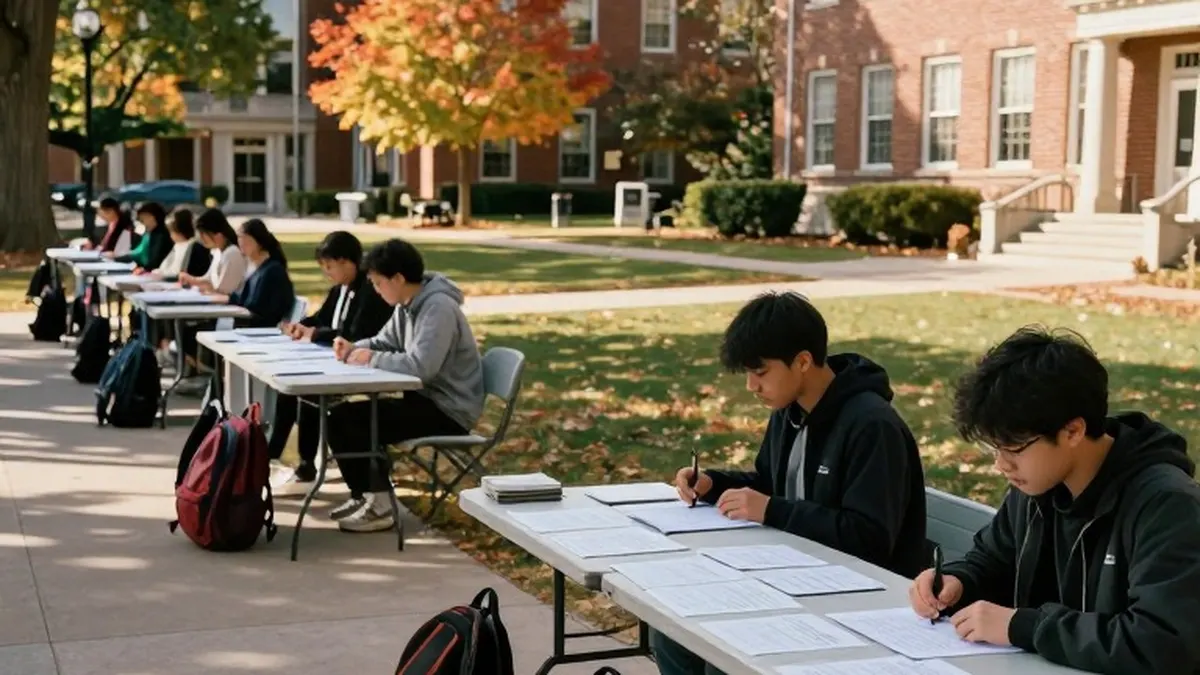
Students who attend college away from home face a choice before they ever receive a ballot: register to vote in their school community, or stay registered at their hometown address. A 1979 Supreme Court decision affirmed that eligible students may register where they live during the academic year. Nearly 50 years later, the practice still draws questions.
The topic has returned to the spotlight because of a change Montana made last year to its voter registration requirements. A student advocacy group sued, and a state judge has blocked the new restriction for now. The earlier rules therefore remain in place for Montana students, including for the midterm elections through Election Day.
Voting in the United States depends on residency, and state and local governments decide who counts as a resident. Federal law, however, sets ground rules so that groups such as students are not treated unfairly. Michael Hanmer, a University of Maryland professor of government and politics who studies student voters, said officials cannot hold different groups to different standards. "College students need to be treated the same as anybody else in the mix here who might be new to a particular place," he said.
Every eligible voter has a right to vote somewhere, and many students resemble people with more than one home, since they can often pick which residence to use for registration. Lawyers call this a person's domicile. Yael Bromberg, an attorney who co-edited the book Youth Voting Rights: Civil Rights, the Twenty-Sixth Amendment, and the Fight for American Democracy on College Campuses, described it as the single, fixed, permanent, principal home where a person intends to return, even if the person does not currently live there. For a student unsure of postgraduation plans, she said, the determination is "highly personal and an individualized assessment."
In Montana, a U.S. citizen who is at least 18 and has lived in the state for 30 days is generally eligible to register. Last year, the Republican-controlled legislature added a restriction for "temporary" residents in an "educational program." Under the revised law, such residents could register in a Montana county only if they plan to make that county or the state their permanent home once the program ends.
Republican state officials argue the provision does not cover students at Montana colleges and universities. In a court filing, they said the opposite reading would "render the word 'temporary' meaningless, because no one understands obtaining a two, four, or eight-year degree as a temporary endeavor."
Missoula County Judge Jason Marks has not accepted that argument so far. In February, he found the restriction likely violates the Montana constitution. After a hearing this month, he is preparing a final ruling in the suit brought by the Montana Public Interest Research Group, known as MontPIRG. The group says the change could cost thousands of students a voice in how their communities are run.
At a public hearing last year, some supporters of the restriction said student voters from outside Montana should not influence the state's elections. Hanmer said he would be surprised if the restriction survives. Still, he cautioned that students choosing where to register should check local rules, because some states require new residents to take extra steps, such as getting a new state ID or changing a car registration. Those steps can cost time, he said, but states "impose them on all new residents, not just college students."
Source: NPR
More News · National news · Report a business · Got a Story?