EU 'Made in Europe' Auto Plan Worries Allied Carmaking Nations and Suppliers
Germany and France's compromise on the EU Industrial Accelerator Act would widen 'European origin' status to a few partners, but leaves out Turkey and Morocco and raises concerns in Japan and South Korea.
By Andres Paredes ·
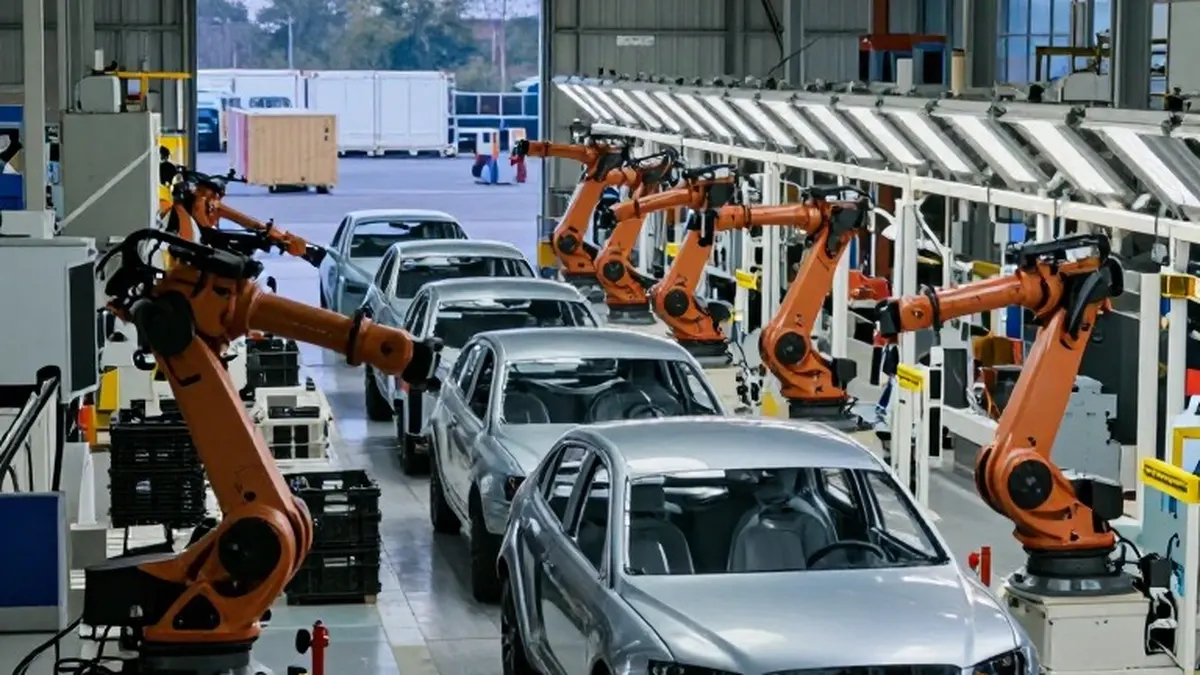
The European Union's Industrial Accelerator Act (IAA), proposed in March, is intended to shield Europe's auto industry from what Brussels sees as unfair Chinese trade practices. It would upgrade European car factories and limit subsidies to vehicles produced in Europe. The plan is now unsettling allied carmaking nations that are closely tied to European supply chains, including Turkey, Morocco, Japan and South Korea.
After months of deadlock, Germany and France reached a compromise earlier this month. Under it, suppliers from non-EU countries such as the United Kingdom and Norway could qualify for 'European origin' status. Other major players would be shut out, among them Turkey, which has had seamless access to the EU market since the mid-1990s. The proposals still face significant legislative hurdles in Brussels before they could become law.
Ayhan Zeytinoglu, chairman of the Economic Development Foundation (IKV), warned that the framework could be devastating for Turkey's auto sector. '73% of Turkey's total automotive exports go to the EU,' he told DW, adding that a 'Made in Europe' barrier would badly damage trade. He argued that excluding Turkey would also hurt European carmaking rather than help it compete with China. Turkey's auto exporters association OIB put the country's automotive exports to the EU at $30.1 billion (€26.8 billion) last year.
The IAA requires that 70% of the value of a vehicle's components, excluding the battery, be made in Europe. The initial proposal covers only battery-electric vehicles, plug-in hybrids and fuel-cell models, which made up just 27% of new EU car registrations last year. Tommaso Pardi of the research network GERPISA and the French National Center for Scientific Research called the threshold remarkably generous, noting that an average European-made electric car without its battery already has around 83% of its parts from Europe.
The revised German-French plan would also bring some self-charging hybrids and petrol and diesel vehicles sold after 2035 under the rules. Those cars contain far fewer European parts, and most of Turkey's nearly 800,000 vehicle exports to the EU last year would fall into this broader category.
Concern about Chinese back-door access is one reason for excluding Turkey. Chinese automakers are expanding there, though with setbacks: SWM Motors closed its Eskisehir factory within a year because its cars did not meet EU safety standards, and BYD's planned $1 billion plant in Manisa is on hold. Morocco has drawn more than €10 billion ($11 billion) in Chinese investment since the pandemic, according to AlixPartners, much of it in batteries and parts. For France, Morocco serves as a low-cost production hub, so excluding it would likely make budget French models more expensive.
Japanese and South Korean makers face risks too. Cars imported from Japan would not receive EU subsidies, while Japanese models built in Europe would benefit only with enough European parts. Hyundai and Kia build cars in the Czech Republic and Slovakia but also ship models from Asia, which would not qualify. Korean battery plants in Poland and Hungary would count as European.
European carmakers are lobbying to weaken the IAA. Pardi said they want to keep the widest scope to source abroad, particularly from China, and they warn that higher parts costs would leave them further behind Chinese rivals. Ankara is lobbying to be included, and automakers are seeking a compromise that would let Turkey join later, possibly only for European firms based there and excluding recent Chinese-funded investments, according to Pardi.
European parts suppliers take the opposite view and want a stronger IAA. They warn that up to 650,000 auto jobs in the region could be lost by 2035 without better protection. Benjamin Krieger, Secretary General of CLEPA, said: 'We must stop the bleeding.' He suggested an opt-in mechanism with objective criteria, including regulatory alignment, social and environmental standards, no market distortion, rule of law and reciprocity. 'Partners that meet them are welcome,' he said.
Source: Deutsche Welle