Lebanon Ceasefire: 21-Year-Old Photographer's Road Back to University
Zeinab Faraj was trapped under rubble after a missile hit her car, killing reporter Amal Khalil and two men.
By Marta Greco ·
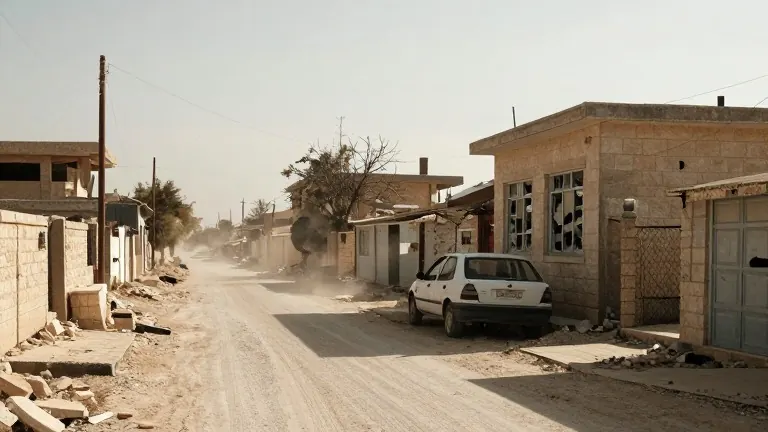
Zeinab Faraj is preparing to return to her university studies, but her physical recovery remains incomplete. The 21-year-old photojournalist still has difficulty walking and suffers from a visibly injured hand. A facial injury has also limited the movement of one eyebrow. She reports waking at night screaming and feeling anxious whenever she hears drones or warplanes.
Faraj was on a routine documentation trip in southern Lebanon on April 22, shortly after Israel agreed to a ceasefire. The truce had ended a month of deadly airstrikes that flattened many villages in the south. Faraj set out with Amal Khalil, a 42-year-old newspaper reporter, to record the aftermath. Khalil had previously contacted Faraj after seeing her work on social media, and the two had collaborated on prior assignments.
The group also included Ali Nabil Bazzi, a 27-year-old municipal official from Bint Jbeil, and Mohammed Hourani, a 37-year-old friend of the mayor. The four had met at the Tebnine governmental hospital, a location residents considered relatively safe. Bazzi planned to sign a marriage contract that evening but joined the trip anyway. Faraj, who was freelancing while finishing a degree in radio and TV, said she felt no fear before the incident.
As the vehicle approached the village of al-Tiri, Faraj heard Khalil scream and saw the car ahead engulfed in flames. Faraj believed she could rescue Bazzi, but Khalil insisted the men were gone. Faraj observed that their bodies were torn apart. The Israeli military later stated it had identified saboteurs violating the ceasefire.
Drones arrived shortly after the initial strike, flying low and close to the ground. Faraj described one drone coming so near her face that she tried to cover it, only for it to rise again. Emergency services promised help was coming, a reassurance Faraj said worked like an anaesthetic. A paramedic instructed them to drive back up the road because ambulances were blocked, but a missile struck their car as they tried to enter it.
Both women were thrown backward, with Khalil wrapping her arms around Faraj. Khalil expressed hope that the drone would think they were dead. They took shelter in a nearby house, where Khalil was bloodied on the face, hand, and leg and unable to move. Faraj sent her sister a final text message before her phone died: "There's no hope left. Forgive me."
Faraj woke trapped under rubble, barely able to breathe. A paramedic held her by the shoulders, and she begged him not to leave. A second paramedic cleared the debris while drones returned. They pulled Faraj out as she screamed in pain. A stun grenade was dropped by a drone during the rescue. Faraj kept mistaking the ambulance engine for a drone during the ride to the hospital.
Nurses at the hospital initially reassured Faraj about Khalil's condition before going quiet. Khalil is believed to have died about an hour before paramedics were allowed back to the area. Human rights groups labeled the attack a war crime, noting that the military received repeated messages requesting permission for a rescue. A week prior, an Israeli military spokesperson had shared a video of Khalil labeled as "terrorist media." Khalil had also received death threats from Israeli numbers.
Faraj remains haunted by the sight of Hourani on the ground with his eyes open. Whether she will return to frontline journalism is uncertain. Her journey back to university marks a new phase after the events in al-Tiri.
Source: The Guardian