Netanyahu Faces Trust Test Amid Military Dispute Before Tuesday Vote
An N12 report of friction with IDF Chief of Staff Eyal Zamir complicates the Prime Minister's campaign narrative ahead of the election.
By Marta Greco ·

Benjamin Netanyahu is asking Israeli voters to link national survival to his continued leadership as the country prepares for Tuesday's elections. His opponents argue that this connection is a political tactic designed to obscure a leadership deficit. The central conflict is not merely about policy preferences regarding Iran, but about which institution holds the credibility to manage that threat after the events of October 7.
The campaign entered its final phase with a sharp focus on trust. Netanyahu presented himself as the sole leader capable of preventing an Iranian-inflicted second Holocaust. The change bloc countered that the Prime Minister can no longer be trusted to distinguish between national security needs and his own political survival. Both sides frame their arguments against the backdrop of the October 7 catastrophe, which has complicated every question about institutional reliability.
The dispute intensified on Sunday when Netanyahu shared an AI-generated image of a nuclear explosion over Tel Aviv. The accompanying warning suggested that his defeat would expose Israel to a second Holocaust. This message linked the country's existence directly to the tenure of one individual. It asked voters to believe that decades of built alliances and capabilities cannot protect the state without him at the helm.
That claim set the stage for a conflicting report released by the N12 News site on Sunday night. The report detailed a confrontation between Netanyahu and IDF Chief of Staff Lt.-Gen. Eyal Zamir. According to the account, Zamir resisted an instruction for an undisclosed military operation that defense officials feared could trigger a confrontation with Iran. Zamir reportedly sought further deliberations and signed documentation concerning the legal authorization of the strike.
Netanyahu denied any tension with the military's top brass over Iran. However, the report provided his rivals with a tool to challenge the Prime Minister's narrative. The political implication was straightforward: if the military leadership is questioning the Prime Minister's judgment, voters must ask whether they can entrust Iran policy to his competitors, or if they should question his own instincts.
Voters are now forced to evaluate the credibility of the source. For some, the N12 account is evidence that military professionals are restraining a Prime Minister whose political considerations are shaping security decisions. For others, it appears as another anonymously sourced story released at a strategically damaging moment. This skepticism echoes reactions to the previously contradicted report that Egyptian intelligence chief Abbas Kamel visited Israel before October 7 to warn of an attack.
The October 7 event complicates the traditional view of the military as a neutral counterweight to political calculation. The security establishment failed in its assessments and preparations that day. For many voters, a report of military opposition to a Prime Minister's action now prompts a different question: why should the military's judgment receive automatic deference when it has already proven fallible?
Yet the question runs in both directions. Netanyahu was Prime Minister on October 7 and bore ultimate political responsibility for the country's security. If the military's failure undermines its claim to unquestioned trust, the political leadership cannot emerge from the same disaster with its own credibility intact. The election forces voters to choose whom to believe among leaders and institutions whose trustworthiness has been shaken.
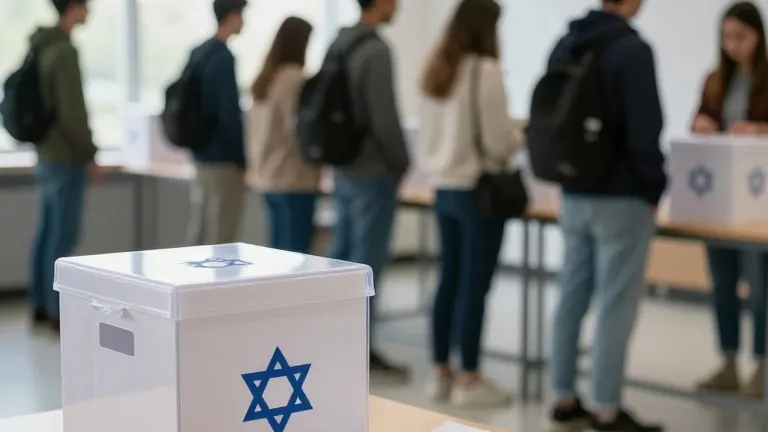
Elections are scheduled for Tuesday. Israelis will select a party and help determine the coalition that will address issues beyond the Iran debate. The competing closing arguments have sharpened the choice: voters must decide whose judgment to trust, whose warnings to credit, and whose motives to believe. Netanyahu argues the danger is too great to replace him. His opponents argue the danger is too great to leave him in place.
Source: The Jerusalem Post