Holiday Hiring Sends Mixed Signals as Amazon Expands and UPS Pulls Back
Seasonal job postings are up 10% from last year, but experts say the picture is uneven as warehouse and delivery roles grow while retailers shift toward permanent part-time staff.
By Andres Paredes ·
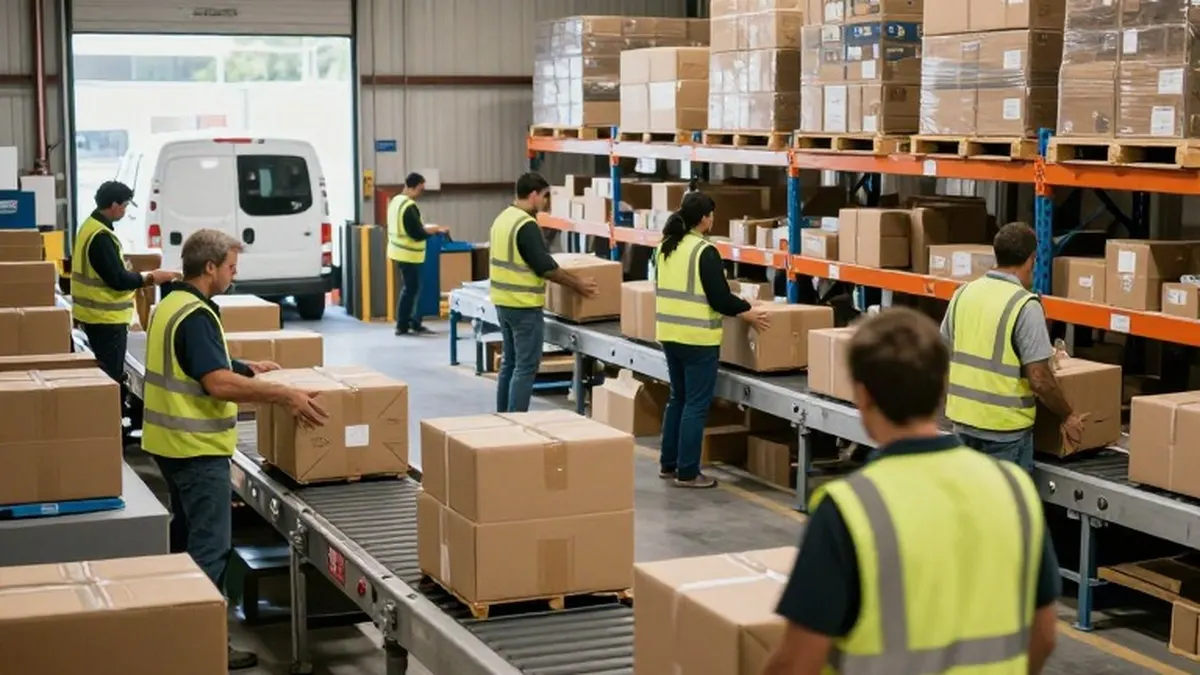
With the holiday shopping season approaching, hiring experts say the employment picture is mixed. Major employers have made conflicting announcements, and fewer retailers are publishing recruitment targets than in past years.
On Oct. 20, Amazon said in a press release that it plans to employ more than 300,000 full-time, part-time and seasonal workers ahead of the peak shopping period. In 2025, the company pledged 250,000 holiday jobs, a 20% increase. UPS, by contrast, announced on Oct. 7 that it would hire 100,000 seasonal employees in 2026, down nearly 10% from its 2025 target.
Andy Challenger, chief revenue officer of outplacement firm Challenger, Gray & Christmas, said these developments are part of why seasonal hiring is giving experts "mixed signals." He does not expect an explosive year like 2021 and 2022, though he told CNBC Make It that after Amazon's announcement "there's reason to be a little bit more positive than we originally thought."
Data from Indeed Hiring Lab, the job board's economic research arm, points to growth. Its Oct. 15 report found that seasonal postings as of Sept. 30, 2026 were up 10% from the same point in 2025. Researchers counted jobs with at least one holiday-related descriptor in the title across Indeed and other job boards. Laura Ullrich, Indeed's director of economic research, said the data captures "a large percentage of jobs," including those from companies that did not pay to list openings on the site. Experts say non-retail roles are driving the increase.
Retail has long dominated seasonal hiring, but its share is shrinking. In 2019, retail made up about 66% of seasonal roles, according to Indeed. It now accounts for 61%. Loading and stocking positions rose from 3.5% of seasonal postings in 2019 to 9% as of Sept. 30, 2026, and warehouse work is the fastest-growing category among retail, sales, customer service, transportation and food preparation. The five most in-demand non-retail titles are customer service representative, unloader, delivery driver, photographer and stocker.
Indeed experts link the shift to the growth of e-commerce. Statista Research Department data shows 87% of Americans now shop online, and experts forecast e-commerce retail sales growth of 6% a year through 2030. Bain & Company projects U.S. holiday retail sales will pass $1 trillion in 2026 for the first time, helped by inflation. Challenger cautioned that this does not necessarily mean more sales, revenue or profit, but suggests inflation "hasn't totally dampened consumers' expectations of participating in shopping this holiday season."
Retailers are also changing their approach. Ullrich said they are posting more permanent part-time jobs in place of seasonal ones. Non-seasonal part-time roles made up 38% of retail job postings in September 2025 and now represent 49% of the holiday retail job market. Seasonal roles were just 20% of retailers' holiday postings in September 2026, down from a year earlier. Ullrich views the trend as positive, saying retailers "realize they need more employees on a permanent basis."
Individual companies have taken different paths. Spirit Halloween said on June 11 that it would hire 52,000 employees, and Michaels plans to onboard more than 10,000 workers for the holidays. Target's website says it will lean on its existing workforce before seeking seasonal hires, and it did not announce headcounts.
Demand from job seekers is also rising. Desktop searches on Indeed for seasonal and holiday terms are up 28% from 2025, a sign workers want extra income before year's end. A June 9 Indeed report found that 16% of active job seekers already hold multiple jobs, and those workers tripled their application volume in the month before landing a second role. Food preparation workers make up the largest share of active seekers looking for additional work, at 17%.
Source: CNBC
More News · National news · Report a business · Got a Story?