Israeli Palestinian Turnout May Hit 72% as Voters Cite Fear
Analysts predict a sharp rise in voting among the 2.1 million Palestinian citizens of Israel on Tuesday, driven by concerns over displacement and violent crime.
By Andres Paredes ·

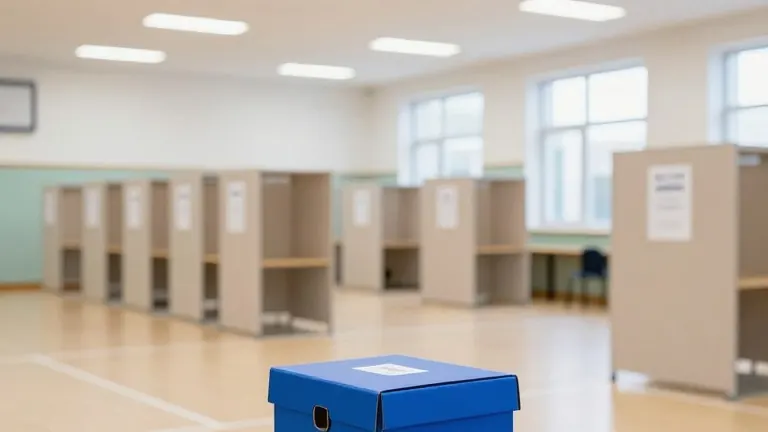
For Ibrahim Said, voting on Tuesday marks the first time in 46 years that he will cast a ballot. The 70-year-old resident of the Galilee has boycotted Israeli elections since 1980, feeling that previous parties failed to improve conditions for Palestinian citizens. This year, he says, the situation has changed. “Without a doubt, we must vote this time. We are living in fear,” Said said in his garage.
Elections take place four years after the last polls placed Benjamin Netanyahu back in office. Since then, Israel has faced a war in Gaza and increased pressure in the West Bank. Within Israel, Palestinian communities report rising organized crime and violent discrimination. Three political parties have made the displacement of Palestinians a central part of their campaigns.
Benjamin Netanyahu’s allies, Bezalel Smotrich and Itamar Ben Gvir, hold vast power in the current government. Smotrich’s Religious Zionism party promises to “Judaise” the Galilee and Negev, regions home to hundreds of thousands of Palestinians. Ben Gvir’s Jewish Power party and Amcha Yisrael, a new far-right group, also feature anti-Palestinian rhetoric in their platforms.
Turnout among Palestinian citizens of Israel was 54 percent in 2022. Polls and analysts suggest that figure could reach 68 percent or higher on Tuesday. Ameer Fakhoury, an analyst at the Vanleer Institute, predicts turnout could hit 72 or 73 percent. If that happens, the Joint List and Raam parties could secure around 15 of the 120 seats in the Knesset, matching a record set in 2020.
Fakhoury notes that high minority turnout usually signals confidence in a democratic system. In this case, he argues, it signals the opposite. “We are voting to prevent displacement and protect the most basic conditions of our existence,” Fakhoury said. He described the act as a lack of confidence in state institutions and an attempt to cling to political forces that might offer protection.
Jowan Safadi, a musician known across the Arab world, has traditionally boycotted elections. He views the process as a democratic facade for a state that is not fully democratic. However, he is re-evaluating his stance due to the current government’s extremism. “My only hope is that changing the people in power might bring someone who is slightly less barbaric and sadistic,” Safadi said. He added that he remains apprehensive because the alternatives could be worse.
Safadi credits the far right with mobilizing the Palestinian vote. “Ben Gvir and Smotrich have effectively done the campaigning for the Arab electoral lists,” he said. A source in the Joint List noted that the parties are spending less money on campaigns than in previous years because the rhetoric of the right is compelling voters to act.
Adham, a mechanic in northern Israel, will vote for Mansour Abbas’ Raam party. He cites organized crime as his primary concern. Last year, there were 252 homicides in Palestinian communities in Israel. In the first half of 2026, there were 147. Police solved only 12 percent of those killings. “I have two adult sons, and I don’t go to bed until they are home,” Adham said.
Yoav Segalovich, a former police major-general, is running on Raam’s list. Raam has sought to attract voters by promising concrete benefits to the community. Maha Mohammed, a teacher in Umm al-Fahm, says women in her town are focused on safety. “They want safety for themselves, their children, their families, their neighbours, the people around them and their entire community,” Mohammed said.
Source: Middle East Eye