Boeing Pushes Back 737 Max Production Increase to Late 2027 as Wing Output Lags
Boeing says it will not significantly raise 737 Max output until the second half of 2027, even as its third-quarter loss narrowed sharply on strength in its defense unit.
By Ahmed Montgomery ·
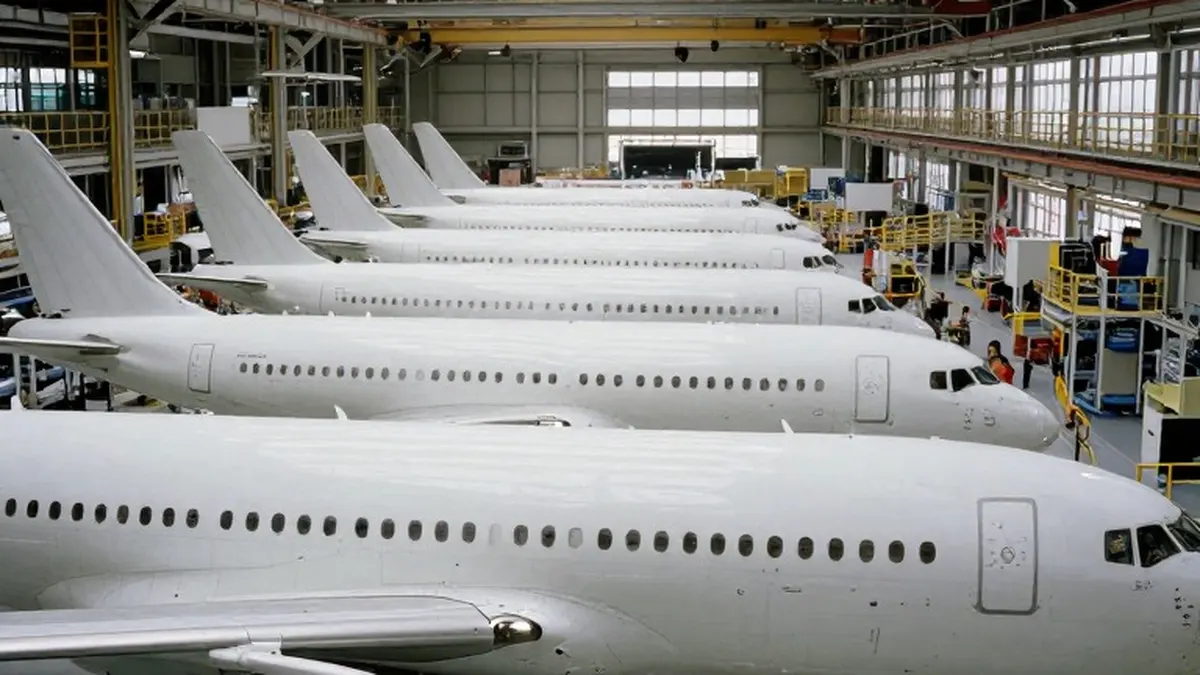
Boeing does not expect to substantially increase production of its best-selling 737 Max jet until the second half of 2027, as a slower-than-anticipated pace of wing production holds back the effort.
Chief Executive Kelly Ortberg said on the company's quarterly earnings call on Tuesday that Boeing is aiming for a rate of 52 planes a month in that period. The manufacturer has been building about 47 of the aircraft each month. Boeing shares fell roughly 9% during the call.
Last month, Ortberg told investors that stabilizing production was taking a "little bit longer" than expected because of the pace of wing output. In an interview with CNBC's Phil LeBeau on Tuesday, he said: "I know everybody wants us to go faster but we're going to do it right."
In a note to staff the same day, Ortberg reiterated that stabilizing production remains the priority. "Looking ahead, expectations are rising, and they should," he wrote. He said that means improving performance through lean, productivity and efficiency gains in daily work while maintaining high standards of safety and quality. He also told employees the company has "more work to do."
Production and deliveries are central to Boeing's recovery because the bulk of an aircraft's price is paid when the customer takes delivery.
For the three months ended Sept. 30, Boeing reported a net loss of $116 million, or 26 cents a share. That compares with a loss of $5.34 billion, or $7.14 a share, a year earlier, when the company took a charge of nearly $5 billion on its long-delayed 777X program. Excluding one-time items, the loss was 34 cents a share, against analyst expectations of a 21 cent loss, according to LSEG consensus estimates.
Revenue rose 4% from a year earlier to $24.19 billion, ahead of the $23.84 billion analysts had expected. Free cash flow climbed to $464 million from $238 million in the third quarter of 2025. The defense unit was a bright spot, with revenue up 15% to $7.94 billion.
The commercial aircraft business was weaker. Boeing delivered 161 commercial airplanes in the quarter, one more than a year earlier, but revenue in the unit fell 3% to $10.72 billion. The division posted a negative operating margin of 6.5%, which Boeing attributed to a "less favorable delivery mix, higher projected costs associated with future production rate adjustments and higher estimated supply chain costs."
The company has also had some recent successes. The U.S. Navy selected Boeing to develop its next-generation fighter jet. Last week, the Federal Aviation Administration approved the 737 Max 10, the largest model in the Max family. That followed approval of the 737 Max 7 in August and completed the certifications for the aircraft line.
Source: CNBC
More News · National news · Report a business · Got a Story?