Boeing Shares Sink 10% After Company Pushes Back Cash Flow Targets
Boeing stock hit a 52-week low on Tuesday after the company said it will reach its $10 billion annual free cash flow goal a year later than Wall Street expected, despite a third-quarter cash flow beat.
By Ahmed Montgomery ·
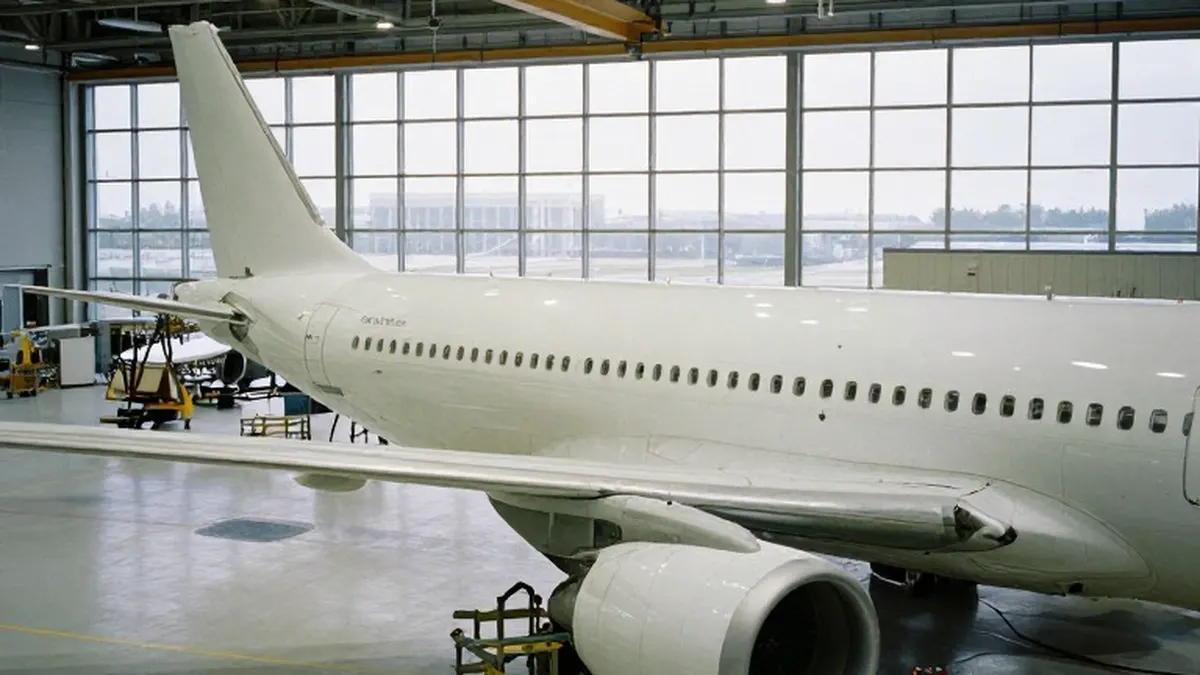
Boeing shares fell about 10% on Tuesday after the aircraft maker outlined a slower path to its long-term free cash flow goals, overshadowing its third-quarter results. The stock dropped to a fresh 52-week low and was on pace for its worst day since the tariff panic of April 2025. It had already struggled in recent months, pressured by the Middle East conflict and difficulties ramping up production of some jet models.
The quarterly numbers themselves were mixed. Revenue rose 4% from a year earlier to $24.19 billion, ahead of the $23.84 billion consensus compiled by LSEG. Adjusted earnings per share was a loss of 34 cents, wider than the 21-cent loss analysts had expected. Free cash flow came in at $464 million, above the $330 million FactSet consensus. That marked the second straight quarter in which Boeing beat cash flow expectations, and the company kept its $2 billion free cash flow expectation for 2026.
The sell-off was driven by the outlook. Boeing now expects to reach its target of $10 billion in annual free cash flow in 2029, a year later than Wall Street had modeled. CEO Kelly Ortberg said free cash flow should be $3 billion in 2027, held back partly by higher capital spending to support the next-generation Navy fighter contract the company won in September. The FactSet consensus for that year was $5.7 billion. For 2028, Boeing projects $6 billion against a Street estimate of $9.6 billion. The 2029 consensus had been $12.9 billion.
In commercial airplanes, the Federal Aviation Administration certified the final two variants of the 737 Max family, the Max 7 in August and the Max 10 last week. Boeing said the 737 program continues to progress toward stabilized production of 47 jets per month. Wings remain a bottleneck. "Our output of wings is improving, but we need to demonstrate sustained performance at this level and ensure we have a high confidence plan to step up to rate 52 when the system is ready," Ortberg said. As a result, the increase to 52 per month is not expected until the second half of 2027, and Boeing now expects to fall short of its goal of delivering 500 737s in 2026.
Elsewhere in the commercial business, 787 Dreamliner output remains steady at eight per month, with a move toward 10 per month expected to begin before the end of the year. Boeing still expects FAA certification of the 777-9 and the start of deliveries in 2027. Production of the 777X is expected to stay at one per month for most of that year, and the program is projected to weigh on 2027 free cash flow before improving in 2028 and turning positive in 2029. The segment booked 300 net orders in the quarter and ended with a $612 billion backlog, covering more than 6,300 airplanes.
Ortberg said Boeing has not seen customer demand change despite higher jet fuel prices tied to the Middle East conflict. He argued that expensive fuel makes more efficient aircraft such as the 737 Max 10 more appealing as airlines look to retire older planes. "So far, the airlines have been, for the most part, flowing the higher fuel into ticket prices," he said on the earnings call, adding that the trend bears watching but that many customers want replacement aircraft sooner. Boeing ended the quarter with a record $745 billion total backlog.
In defense, Ortberg highlighted the Navy award for the F/A-XX Strike Fighter, saying it will "shape the company for decades to come" and calling the defense portfolio "a little bit of a sleeper." Boeing also won a new Air Force fighter contract last year. The segment booked $23 billion in orders and ended the quarter with a record $101 billion backlog, not counting the F/A-XX win. It continues to target a high-single digit operating margin by the end of the decade.
Global Services, the smallest of the three segments by revenue, saw higher volumes and a better mix lift its margin. CFO Jay Malave said "both commercial and government businesses delivered double-digit margins in the quarter." The unit took in $5 billion in orders and finished the period with a $33 billion backlog.
Source: CNBC
More News · National news · Report a business · Got a Story?